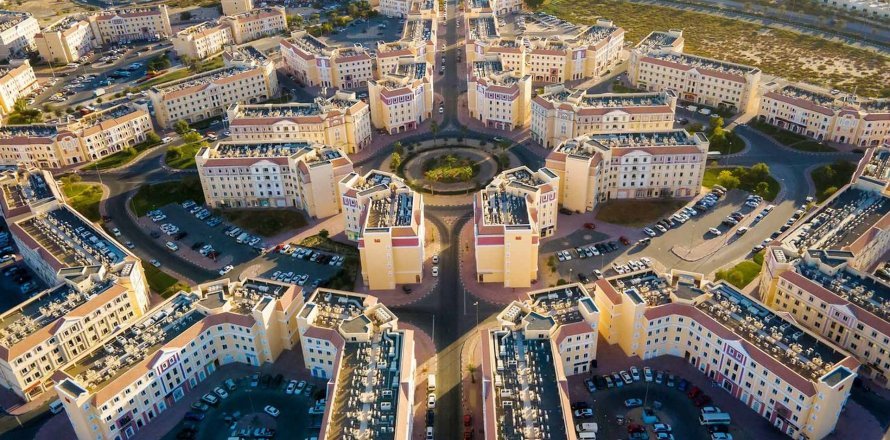
International City at a glance
| Measure | Current |
|---|---|
| Typical sale price | from AED 300k |
| Typical annual rent | AED 22k-33k/yr |
| Most in demand | studios & 1-bed apartments |
International City Community Guide: High Yields in Dubai's Themed Clusters
This International City community guide from Al Dar Aljadeed Real Estate walks you through everything that matters when you are weighing an affordable, income-focused entry into the Dubai property market, from indicative sale prices and rents to schools, clinics, road links and the rental yields that keep this district near the top of almost every investor's shortlist. International City is one of Dubai's largest freehold master communities, laid out around country-themed clusters such as China, Persia, England, France, Greece and the Emirates zone, each with its own architecture and character. For buyers searching for the strongest gross return per dirham invested, few areas in the emirate rival the combination of low entry pricing and deep, resilient tenant demand found here.
Why International City Is So Popular
The appeal of International City rests on a simple equation that keeps attracting first-time investors and portfolio builders: some of the lowest freehold entry prices anywhere in Dubai, paired with consistently high occupancy. Because studios and one-bedroom apartments here can be acquired for a fraction of the cost of comparable units in Downtown Dubai or Dubai Marina, the rent they generate represents an unusually large percentage of the purchase price, putting the district among the highest-yielding freehold communities in Dubai.
Demand is underpinned by the sheer size of the tenant pool. International City sits close to Dubai's industrial, logistics and trading corridors, and its affordability makes it a natural home for the working professionals, young couples and value-conscious tenants who keep the city moving. Rents stay accessible, turnover is offset by a near-constant flow of new renters, and the presence of Dragon Mart, one of the largest trading hubs of Chinese products outside China, adds a commercial gravity few affordable communities can match, so finding a tenant is rarely the problem.
Location and Connectivity
International City occupies a strategic position in the south-east of Dubai, close to Al Warsan and within easy reach of the emirate's main arterial roads. Sheikh Mohammed Bin Zayed Road (E311) and Al Awir Road (E44) frame the community, giving residents direct routes toward Downtown Dubai, the airport, Deira and the wider Northern Emirates. In practical terms, Dubai International Airport (DXB) is roughly a twenty-minute drive, while the business and leisure districts of central Dubai are comfortably reachable via the highways.
This positioning is one of the quiet strengths of the area. Affordability need not mean isolation, and International City is genuinely well connected to the places tenants reach for work, whether the trading warehouses of Al Aweer, the offices of Deira, or the logistics zones toward Dubai South. The honest trade-off is that peak-hour congestion on the feeder roads can slow the daily commute.
Property Types and Who They Suit
The housing stock in International City is dominated by low-rise apartment buildings arranged around the themed clusters, offering studios, one-bedroom and a smaller number of two-bedroom layouts, plus a courtyard and business zone and newer developments that have raised the quality bar in parts of the community. This mix suits yield-focused investors rather than luxury buyers, and tenants who prioritise low rent and everyday convenience over premium finishes.
Studios and compact one-bedroom units are the workhorses of the market, precisely because they command the highest gross yields and the fastest re-letting. Indicative sale prices commonly start from around AED 300,000 for studios and reach roughly AED 420,000 to AED 560,000 for one-bedroom apartments, with two-bedroom homes higher depending on cluster, building and condition. Because service charges here are among the lowest in the city, the gap between gross and net income stays relatively narrow, a meaningful point for anyone modelling long-term cash flow.
Lifestyle and Everyday Value
Life in International City is defined by practicality and value rather than glamour, and that is precisely what its residents want. The ground floors of many buildings are lined with affordable eateries, grocery stores, laundries, salons and small businesses serving a diverse, multinational population, where day-to-day costs stay low and essentials are within walking distance.
Green spaces, pocket parks and pedestrian areas are woven between the residential blocks, and the pace of life is calmer than in the high-density towers of central Dubai. For families and singles on a budget, the mix of low rent, on-the-doorstep retail and quick highway access delivers everyday value that punches above the price point, and sustains the reliable, price-sensitive tenant demand that makes the numbers work.
Dining, Retail and Everyday Amenities
Retail is arguably International City's headline amenity. Dragon Mart and its extension Dragon Mart 2 form a vast shopping and trading destination on the doorstep, drawing shoppers from across Dubai for electronics, furniture, homeware and fashion at keen prices. Inside Dragon Mart 2 you will also find Novo Cinemas, food courts and family entertainment, a genuine leisure anchor without leaving the community.
Beyond the malls, the clusters themselves are packed with casual dining reflecting the area's diversity, from Chinese and Pakistani kitchens to Arabic and South Asian favourites, alongside multiple supermarkets and convenience stores, while the wider retail of Deira and Downtown Dubai is a short drive away for bigger trips. That steady, deliberately practical convenience is a large part of why tenants renew.
Schools, Nurseries and Healthcare
Families renting in International City benefit from early-years provision on the doorstep, with Kids World Nursery inside the community, while a strong cluster of schools sits just beyond it in neighbouring Al Warqa and Nad Al Sheba. British, American and Indian curriculum options such as Newlands School, Primus Private School and GEMS Our Own English High School are within a short drive, typically ten to fifteen minutes, giving parents a broad choice across price points and curricula.
Healthcare is well covered for a community at this price level. Aster Clinic operates within International City itself, an NMC Medical Centre is close by, and larger facilities such as Zulekha Hospital are reachable in under twenty minutes for specialised care, with pharmacies and dental clinics dotted throughout the clusters. For investors, accessible schooling and medical services broaden the tenant pool beyond single professionals to include budget-conscious families, supporting occupancy and lease stability.
Getting Around
International City is a car-friendly community, and most residents rely on private vehicles or ride-hailing, helped by direct connections onto Sheikh Mohammed Bin Zayed Road and Al Awir Road. An internal and feeder bus network links the clusters to nearby metro stations and the wider RTA system, and the Dragon Mart bus station is a useful local hub for public-transport commuters.
The forward-looking story is the proposed Dubai Metro Blue Line, planned to serve this side of the city, which would meaningfully improve public-transport access over the coming years. Until then, the area is served primarily by bus rather than an in-community metro station, though the strong road links and twenty-minute reach to Dubai International Airport already tick the boxes that matter for most tenants.
Investment Potential and Rental Yields
From an investment standpoint, International City exists to do one thing exceptionally well: generate high gross rental yields on a low capital outlay. Indicative studio rents commonly sit around AED 22,000 per year and one-bedroom rents around AED 33,000, and when set against entry prices from roughly AED 300,000, those rents translate into gross yields that frequently land in the seven to eight percent range, among the strongest income plays in Dubai's freehold market, with low service charges keeping net returns close behind.
The investment case is squarely about cash flow rather than rapid capital appreciation. Price growth here tends to be steadier and more modest than in prime districts, so the strategy that suits it best is buy-to-let income, ideally in the studios and compact one-bedroom units where yield and lettability are highest. The honest counterweights are older building stock in the early clusters, higher tenant turnover and reliance on a value-driven renter base, all of which reward careful building selection and active management. Approached realistically, few Dubai communities let a modest budget work as hard. All figures are indicative market averages that vary by building, unit, floor and view.
Talk to Al Dar Aljadeed Real Estate
If International City fits your goal of a high-yield, affordable entry into Dubai property, the team at Al Dar Aljadeed Real Estate can help you compare clusters, buildings and live listings and build a realistic picture of income and running costs before you commit. Get in touch to explore the opportunities here and across Dubai.
What is nearby in International City
| Category | Place | Distance |
|---|---|---|
| Nurseries | Kids World Nursery | in the community |
| Schools | Newlands School, Al Warqa | ~10 min |
| Primus Private School | ~12 min | |
| GEMS Our Own English High School | ~15 min | |
| Clinics & healthcare | Aster Clinic | in the community |
| NMC Medical Centre | ~10 min | |
| Zulekha Hospital | ~18 min | |
| Retail & malls | Dragon Mart | in the community |
| Dragon Mart 2 | in the community | |
| Leisure & entertainment | Novo Cinemas | in the community |
| Dubai Safari Park | ~12 min | |
| Sport & leisure | Desert Palm Polo Club | ~10 min |
| Bus | Dragon Mart Bus Station | in the community |
| Airports | Dubai International Airport (DXB) | ~20 min |
Al Dar Aljadeed Real Estate — current availability, honest pricing and viewings at short notice.
Talk to our team → See homes in International City →